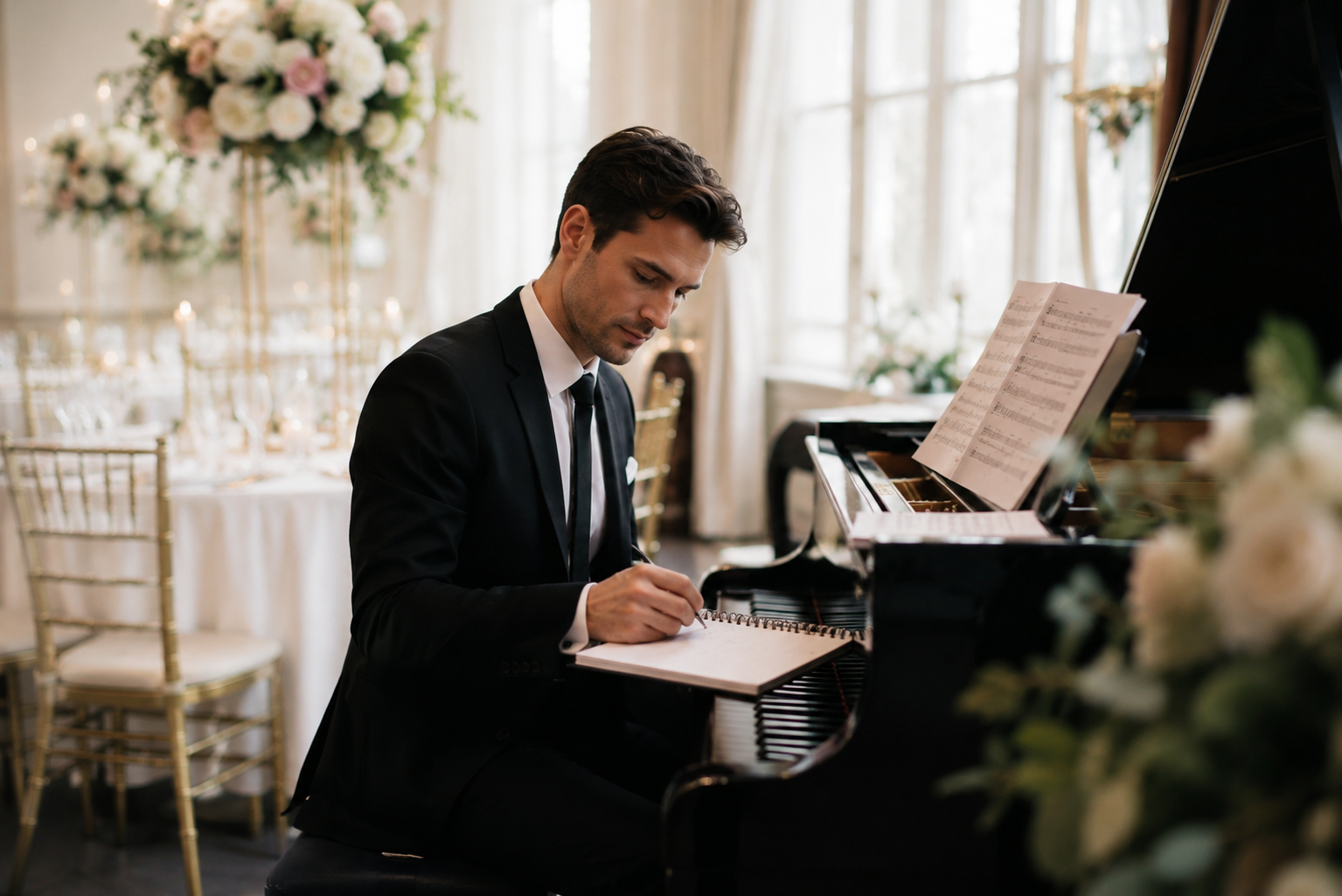
How I Prepare the Music Repertoire for Each Couple (My Process)
One of the questions I often receive is whether I have a standard list of songs that I play at every wedding. The answer is no. While I do have pieces that I know well and return to often, I almost never use exactly the same set of music for different couples.
Every wedding has its own atmosphere, story, and requirements. That’s why I treat the preparation of the repertoire as an individual process for each couple. Below I’ll explain how I usually approach this work.
First Conversation and Understanding the Vision
The process usually begins with a conversation. I ask the couple about their musical preferences, favorite songs, and the overall mood they want to create on their wedding day. Some couples already have a clear vision, while others are open to suggestions.
At this stage, it’s important for me to understand not only what music they like, but also how they want the day to feel — calm and romantic, joyful and energetic, elegant and classic, or something more modern and relaxed.
Breaking Down the Wedding Day
After the initial conversation, I break the wedding day into parts and think about what kind of music is needed for each section:
- Prelude (while guests are arriving)
- Ceremony (processional, vows, ring exchange, recessional)
- Cocktail hour
- Dinner
- Special moments (first dance, parent dances, cake cutting, etc.)
Each of these moments requires a different musical approach in terms of energy, volume, and emotional tone. I try to create a logical musical flow throughout the day rather than just selecting random songs.
Considering Personal Requests and Limitations
Many couples have songs that are meaningful to them. I always try to include these when possible. However, I also evaluate whether a song will work well in a live setting and whether it fits the specific moment emotionally.
Sometimes a song that is very important to the couple may not be ideal for a particular part of the ceremony. In such cases, I suggest alternatives that preserve the same feeling but are better suited for live performance.
Creating a Balanced and Cohesive Program
When preparing the repertoire, I pay attention to balance. I try to avoid having too many songs of the same style or tempo one after another. I also consider the overall musical journey of the day — from more emotional and calm pieces during the ceremony to lighter and more uplifting music later in the evening.
This approach helps create a natural progression and prevents the music from feeling monotonous or repetitive.
Preparing for Flexibility
Even with careful preparation, weddings rarely go exactly according to plan. That’s why I always prepare with some flexibility in mind. I usually have additional pieces ready and remain open to adjusting the music on the day depending on timing, guest energy, or the couple’s wishes.
Being able to adapt in real time is one of the advantages of live music, and I try to build this flexibility into my preparation process from the beginning.
Final Thoughts
Preparing music for a wedding is not just about selecting songs from a list. It’s a thoughtful process that takes into account the couple’s personality, the structure of the day, the venue, and the desired atmosphere.
When the music is prepared with attention to these details, it becomes more than just background sound. It becomes an integral part of the wedding story — supporting the emotions and helping to create moments that feel personal and memorable.